
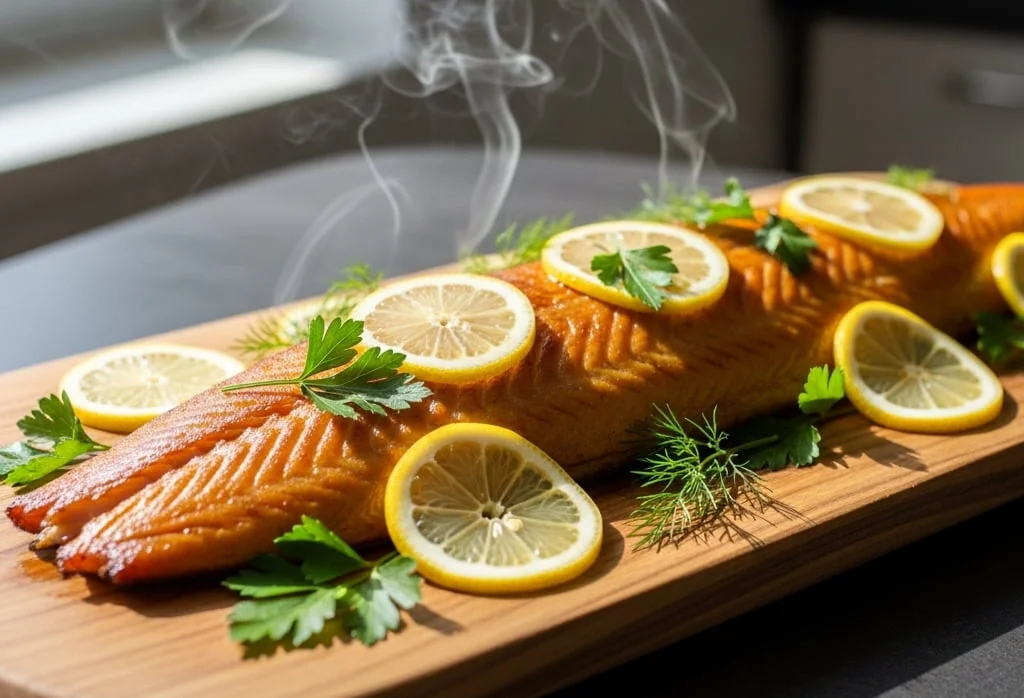
Smoked haddock is perfect for anyone who wants both taste and health in one dish.
It is a type of white fish that has been cured through smoking to enhance its flavor and shelf life. The fish stands out for its light texture, distinct smoky taste, and versatility in cooking. People across the UK and around the world enjoy it in classic recipes like kedgeree and Cullen Skink, as well as in simple poached dishes.
This fish is not only flavorful but also valued for its nutrition. Unlike oily fish, it’s leaner but still full of essential nutrients. It provides lean protein, vitamins, and minerals that support health, making it a wise choice for everyday meals. Whether you want to prepare a traditional dish or a quick weeknight dinner, it fits naturally into many cooking styles.
Personally, I first tried it in a simple soup, and what struck me was how it delivered such a rich, smoky flavor without feeling heavy. That balance of taste and lightness is what makes it stand out, and it’s why I often recommend it to anyone looking for a healthier alternative to oily fish.
For anyone interested in healthy eating, cultural food traditions, or exploring new recipes, the fish is a practical and rewarding ingredient to try.
What is Smoked Haddock

Smoked haddock is a fillet of haddock fish that has been preserved and flavored through smoking. The process usually involves curing the fish with salt and then exposing it to smoke from hardwoods. This gives the fish its golden yellow color, easily recognizable in soups and pies, while also helping extend its shelf life. Unlike oily fish, haddock is lean, so the smoking process adds much of the flavor that makes it popular.
In traditional markets, you may come across two famous varieties. Finnan Haddie is a style originating from Scotland, where the fish is cold-smoked to develop a delicate yet pronounced flavor. Arbroath smokies, another Scottish specialty, are hot-smoked fish with a stronger and richer taste. Cold-smoked fish often suits gentle poaching or creamy dishes, while hot-smoked fish works well in robust recipes that need bolder flavor. Both are recognized for their unique preparation methods and are protected as regional delicacies.
It has deep historical roots, with records of its enjoyment in Scottish and English coastal towns dating back centuries. Depending on the region, it may also be sold in either dyed or undyed form. Dyed haddock has a bright yellow color, added for visual appeal, while undyed fish retains its natural pale appearance. Both versions share the same taste and texture, though many experts recommend undyed fish for a more natural presentation on the plate.
Outside the UK, the fish is often sold as smoked white fish, making it more accessible for international cooks who want to experiment with traditional recipes.
Popular Recipes Using Smoked Haddock

The fish shines in both traditional and modern recipes. Its smoky flavor pairs well with creamy sauces, starchy bases, and fresh vegetables. Here are some of the most popular ways to enjoy it at home.
Kedgeree
A classic British-Indian dish that blends rice, fish, boiled eggs, and mild spices. Ready in about 40 minutes, it works well for breakfast or dinner. Add a sprinkle of fresh herbs like parsley or coriander for extra freshness.
Cullen Skink
This Scottish soup combines the fish with potatoes, onions, and milk. Typically ready in 30–35 minutes, this hearty and comforting dish is a staple of the menu. Serve with crusty bread for a complete meal.
Gratin
Layer the fish with potatoes, cream, and cheese, then bake until golden. This gratin takes approximately 45–50 minutes to prepare and makes a satisfying meal for the whole family. A squeeze of lemon at the end balances the richness.
Smoked Haddock and Potato Dishes
Potatoes complement the fish in many forms, from mashed bases to baked layers. A simple option is poached fillets served over buttery mash, a comforting plate ready in under 30 minutes.
Risotto
Cook the rice slowly in stock, then fold in the flaked fish at the end. This dish takes about 35–40 minutes and gives a restaurant-style feel at home. For a lighter version, try swapping the rice with quinoa.
Smoked Haddock in Milk
One of the simplest recipes, ready in about 20 minutes. Simmer the fish gently in milk until tender. The milk absorbs the smoky flavor and can be used to create a sauce to serve with it. Garnish with fresh parsley for a simple but elegant finish.
How to Cook Smoked Haddock

The fish is versatile and works well with several cooking methods. The approach you choose depends on whether you want a light meal or a more decadent dish. It also cooks quickly and is hard to get wrong, which makes it a great choice even if you are new to cooking fish.
Poaching
One of the most reliable ways to prepare the fish is poaching. Place the fillet skin side down in a pan with milk or a mix of milk and water. Keep the liquid at a gentle simmer for 6 to 8 minutes, depending on thickness. The fish should turn opaque and flake easily with a fork. Poaching in milk softens the smoky flavor and creates a creamy base that can be reused in chowder, soup, or sauce. Serve the poached fillet with mashed potatoes or steamed greens for a complete meal.
Baking
Baking is straightforward and preserves the natural flavor of the fish. Preheat the oven to 180°C (350°F). Place the haddock in a baking dish, add a small amount of butter or olive oil, and cook for 15 to 20 minutes. A sprinkle of black pepper, lemon juice, or fresh herbs enhances the flavor. This method works well when combined with vegetables or potatoes for a wholesome dish.
Grilling
Grilling gives the fish a slightly crisp edge while keeping the inside moist. Brush the fillet lightly with oil and grill for 3 to 4 minutes per side—season with black pepper or lemon juice for freshness. The result is a smoky flavor with added texture.
How to Smoke Haddock
For those preparing haddock from scratch, smoking can be done through hot or cold methods. Hot smoking cooks the fish at higher temperatures, giving it a stronger flavor and firmer texture, and it can be eaten as is. Cold smoking is a slower process that produces a delicate taste, closer to traditional Scottish varieties like Finnan haddie, but it usually requires further cooking before serving. The choice of wood, such as oak or beech, also affects the flavor profile.
Whether you want delicate flavors or bold smoky richness, there’s a cooking method to match.
Smoked Haddock Dishes and Meals

The fish works in everyday meals without much effort. It is easy to batch-cook for the week, and it can even be a kid-friendly option when paired with mashed potatoes.
Breakfast Ideas
Flake the fish into omelets for a protein-rich start to the day, ready in under 10 minutes. You can also top it with a poached egg for extra richness.
Quick Dinners
Mix the fish with pasta for a satisfying 20-minute meal. It pairs naturally with greens like spinach or peas, and it balances well with rice or mashed potatoes. A squeeze of lemon or a light dressing helps brighten the flavors.
Family Meals
For lighter options, add the fish to salads or grain bowls. For heartier dishes, use it in pies, casseroles, or baked meals that can be shared around the table.
The fish’s flavor is strong enough to stand out, yet gentle enough to blend with simple ingredients, making it easy to adapt for any meal of the day.
Is Smoked Haddock a Healthy Fish

Yes, the fish is a healthy choice when enjoyed in moderation. It is low in calories, high in protein, and provides essential nutrients like vitamin B12, selenium, and phosphorus. These nutrients support energy, immunity, and bone health, making it a brilliant addition to a balanced diet.
Compared with oily fish such as salmon or sardines, haddock contains less omega-3 fat. While this means it offers fewer heart-protective benefits, it is still valuable for those who prefer a lighter fish with less oil. Compared to other lean white fish like cod, pollock, or even unsmoked haddock, the nutritional profile is very similar, with the main difference being the distinct smoky flavor.
Its lean profile makes it especially suitable for people managing their weight, following a low-fat diet, or those who find oily fish too rich.
The main point to consider is sodium. Because the fish is cured and smoked, the salt levels are higher than in fresh fish. In some cases, a single portion can provide up to a third of your daily recommended intake. Individuals with high blood pressure or those who limit their salt intake should be mindful of their portion sizes. Choosing undyed fillets and pairing them with vegetables or whole grains can help balance the meal’s nutritional value.
Some assume smoked fish is not healthy because of the curing process, but in moderation, it can be very nutritious. In my experience, dietitians often highlight it as a lighter protein option compared to oily fish, especially for people who prefer less fat in their meals. Nutrition experts usually recommend it as part of a varied diet.
In short, the fish is healthy, provided you balance it with fresh vegetables and moderate your portions.
Nutrition of Smoked Haddock

Smoked haddock is a lean white fish, which means it provides high-quality protein without excess fat. A standard 100-gram portion delivers around 18 to 20 grams of protein while staying relatively low in calories. This makes it a satisfying choice for those looking to maintain muscle while controlling weight.
It is also rich in essential vitamins and minerals. The fish contains B vitamins, especially B6 and B12, which support energy production and healthy nerve function. It is a good source of selenium, a mineral that contributes to immune health, and phosphorus, which plays a role in strong bones and teeth.
Because haddock is naturally low in fat, it offers less omega-3 than oily fish such as salmon or mackerel. Compared to other lean white fish like cod or unsmoked haddock, the fish stands out mainly for its distinctive flavor rather than nutritional differences. Still, it fits nicely into a balanced diet, especially for people who want a lighter option.
The primary consideration is sodium. The smoking and curing process increases salt content, with levels often ranging between 600–800 mg per 100 grams. This means the fish should be eaten in moderation if you are watching your salt intake. Pairing it with vegetables or whole grains helps balance the salt and makes the meal healthier.
Another factor is whether the fish is dyed or undyed. The dye does not affect nutrition, but many buyers prefer undyed fillets for a more natural product.
At a glance (per 100 g portion, approximate):
- Calories: 90–110 kcal
- Protein: 18–20 g
- Fat: 0.5–1 g
- Sodium: 600–800 mg
- Vitamin B12: High
- Selenium: Good source
Overall, the fish is a good option for high-protein, low-fat diets and works well for anyone looking for a nutritious option that is lighter than salmon or mackerel but still full of flavor.
Buying and Storing Guide

When buying the fish, check whether it is dyed or undyed. Undyed fillets are preferred for a natural look, and dyed fillets are more common in supermarkets, while undyed ones are usually found in specialty stores. Buy from reputable fishmongers and check labels for the smoking method and sell-by date. Fresh fillets should be firm, moist, and have a pleasant smoky aroma.
A typical serving is one fillet per person. Store the fish in the fridge and use it within two to three days. For more extended storage, wrap tightly in an airtight container or vacuum-sealed bag and freeze for up to three months. Thaw slowly in the fridge before cooking, and never refreeze thawed fillets to preserve texture and flavor.
Smoked Haddock Around the World

The fish is a staple in the UK, especially in Scotland, where varieties like Finnan haddie and Arbroath smokies have been enjoyed in coastal towns for centuries. It is also available in other international markets, including Europe, Canada, and Australia. In the US, it is often sold as pre-packaged fillets and used in chowders or fish pies.
Cultural cooking styles influence flavor. In Scotland, smoking techniques are slow and mild, producing a buttery, delicate taste, whereas in other countries, quicker methods create a bolder, smokier flavor. The fish adapts easily to both traditional recipes and modern dishes worldwide. If unavailable locally, frozen fillets are a convenient alternative.
Conclusion
Smoked haddock is a versatile, nutritious fish with a distinct smoky flavor. In my experience, it is one of the easiest fish to make impressive meals with. It provides lean protein, essential vitamins, and minerals while fitting easily into a variety of meals. High in protein, low in fat, and nutrient-rich, it works well in traditional dishes like kedgeree and Cullen Skink, as well as in simple poached fillets. Its smoky taste elevates even the simplest meals.
By choosing undyed fillets, storing them properly, and using appropriate cooking methods, you can enjoy both their flavor and health benefits. Exploring recipes with the fish allows you to combine cultural tradition with practical, delicious meals. Available worldwide, it’s easy to try traditional and modern dishes anywhere. Start with a simple poached fillet this week and explore more recipes gradually. Don’t be afraid to experiment with herbs, spices, and side dishes to make it your own.
FAQs
What is another name for smoked haddock?
It is also called Finnan haddie in Scotland, and Arbroath smokie for the hot-smoked variety. Outside the UK, it’s often labeled smoked white fish.
Is haddock a fish?
Yes, haddock is a white fish from the North Atlantic, related to cod. It is an excellent source of lean protein.
Can I eat smoked haddock as part of a healthy diet?
Absolutely. The fish is low in fat and high in protein. Just watch the sodium content if you are limiting salt intake.
What is the best way to cook smoked haddock?
Poaching in milk or water at a gentle simmer preserves flavor and texture. Baking or grilling also works well. Poached haddock is soft and creamy, baked fish is flavorful with a firmer texture, and grilling adds a slight crispiness.
How long do you smoke haddock?
Cold smoking takes several hours at low temperature, while hot smoking cooks the fish faster at higher heat.
How can I tell if smoked haddock is cooked perfectly?
The fish should turn opaque and flake easily with a fork.
How should I store smoked haddock after opening?
Keep it in the fridge in an airtight container and use within 2–3 days, or freeze for more extended storage.
What is a smoked haddock called?
The name varies by region: Finnan haddie, Arbroath smokie, or smoked haddock. Try serving it with eggs for breakfast or in a creamy chowder for dinner.


